Is Skokie’s Hard Water Ruining Your Tankless Water Heater?
If you’ve made the switch to a tankless water heater in Skokie, or nearby in Niles or Evanston, you’ve made a smart investment. No more waiting for a tank to refill, lower bills, and a smaller footprint. But here is the reality: our local water is quietly aggressive toward these machines. At Lifetime Plumbing, we pull apart heat exchangers in Skokie every week that are choked with calcium. It’s a heartbreak to see a high-end Navien or Rinnai die at year seven when it should have lasted twenty. The culprit isn’t a factory defect; it’s the invisible mineral content in our Lake Michigan water supply.
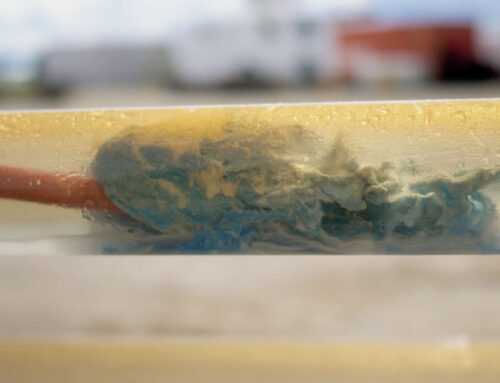
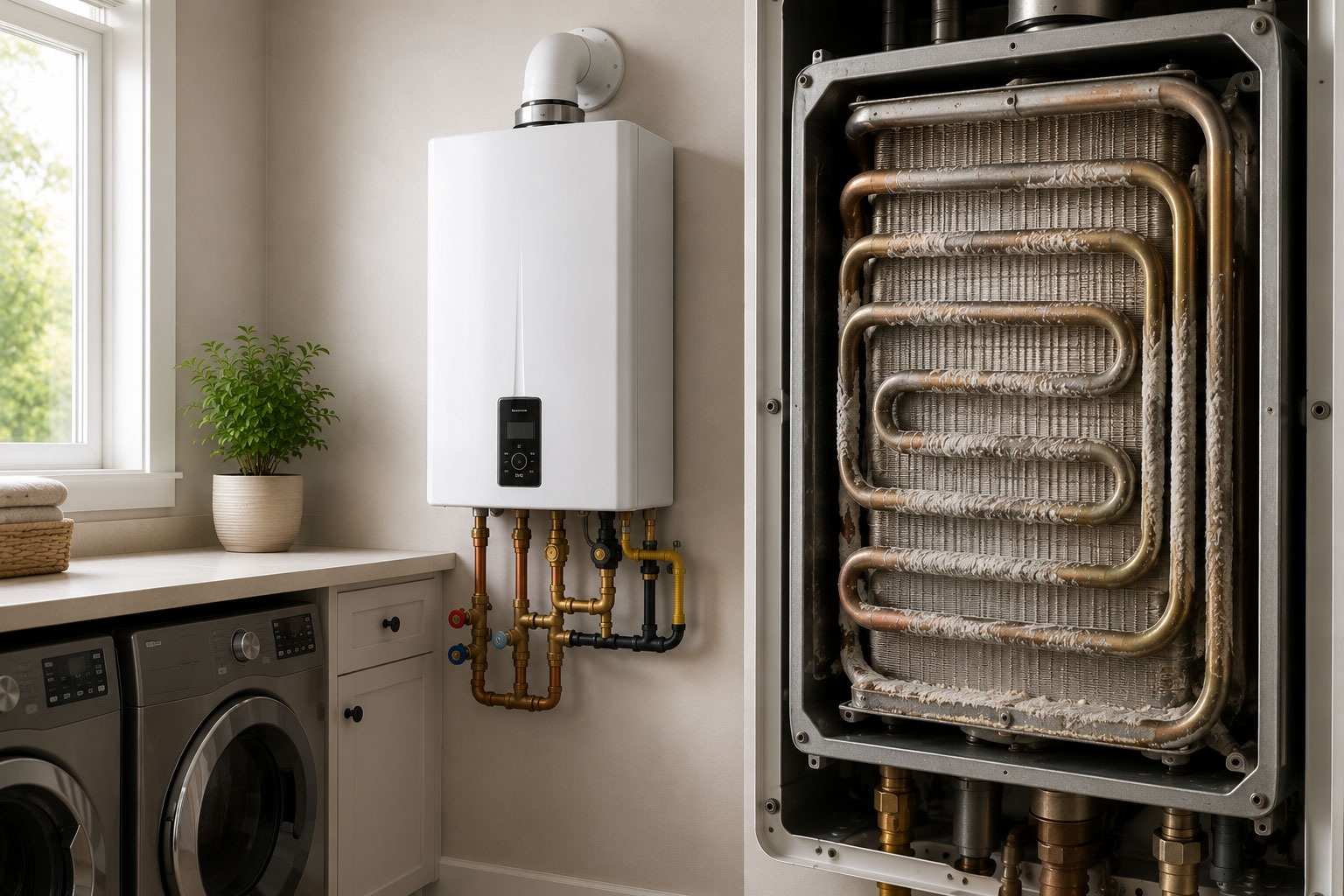
Skokie’s water comes through the Evanston filtration plant. While it’s clean and safe to drink, it’s technically “hard.” We typically see levels between 7.6 and 8.8 grains per gallon (gpg). In the plumbing world, anything over 7 gpg is the danger zone for tankless technology. A tankless unit doesn’t just store water; it flash-heats it through narrow copper or stainless steel coils. When that hard water hits those extreme temperatures, the minerals precipitate out and bake onto the metal like a layer of concrete. This is the beginning of the end for your unit’s efficiency.
How Scale Systematically Destroys the Heat Exchanger
The heat exchanger is the heart of your tankless system. It’s where the gas burner transfers heat to the water. In Skokie, scale (calcium carbonate) forms a thermal barrier on these coils. This is essentially an insulation layer. Instead of the burner heating the water, it has to heat the rock layer first. This forces the unit to fire hotter and longer to meet your demand. This extra heat doesn’t just waste gas; it causes metal fatigue. Over time, the copper coils expand and contract under extreme stress until they develop microscopic cracks. When that happens, the unit is usually a total loss. We see this often in homes near the Skokie North Shore Channel, where units work overtime during the freezing Illinois winters.
Beyond the metal failure, scale creates mechanical chaos. It gunks up the flow sensor—the tiny turbine that tells the computer to turn on the burner. If that sensor is sluggish because of mineral buildup, you get the “cold water sandwich,” where your shower goes ice-cold for thirty seconds before heating back up. It also affects the thermistors (temperature sensors). If a sensor is coated in lime, it sends a false reading to the control board, leading to fluctuating temperatures and “Error Code 11” or “12” shutdowns. These common plumbing problems are almost always preventable with the right maintenance schedule.
Skokie Water Hardness & Action Levels
| Hardness Level | Grains Per Gallon (gpg) | Impact on Tankless Unit |
|---|---|---|
| Soft | 0 – 3.5 | Minimal risk; standard maintenance. |
| Moderately Hard | 3.5 – 7.0 | Scale begins to form on sensors. |
| Skokie Average | 7.6 – 8.8 | High Risk – Annual flush mandatory. |
| Very Hard | 10.5+ | Severe – Immediate warranty risk. |
The Financial Sting: Voided Warranties
This is the conversation every homeowner dreads. You call for a repair, expecting it to be covered, only to find out the manufacturer has denied the claim. Rinnai, Navien, and Noritz all state in their fine print that damage caused by scale buildup is a maintenance issue, not a manufacturing defect. If we open a unit and find the heat exchanger clogged with Skokie limestone, the warranty is effectively void. You’re looking at an $1,800 replacement part plus labor on a unit that might only be six years old. We always advise our customers near Old Orchard and Devonshire to keep their service receipts. If you can prove you’ve done an annual professional flush, the manufacturer is much more likely to honor the warranty on other electrical components.
Inefficiency also hits your wallet every month. Even a 1/16th-inch layer of scale can drop your unit’s efficiency by 15%. You bought a high-efficiency heater to save money, but the hard water is stealing those savings back. If your gas bill is creeping up without a change in usage, your heater is likely struggling against a mineral wall. This extra load doesn’t just cost money; it shortens the life of the gas valves and the venting system due to higher exhaust temperatures. If you suspect a leak due to these stresses, water leak detection is the first step before the damage spreads to your drywall.
Recommended Maintenance for Skokie Units
| Service Type | Frequency | Goal |
|---|---|---|
| Professional Flush | Annually | Chemical removal of calcium from coils. |
| In-line Filter Clean | Every 6 Months | Clear sediment from the cold water inlet. |
| System Inspection | Annually | Check sensors, ignition, and vent integrity. |
| Water Softener Check | Monthly | Ensure salt levels are protecting the home. |
FAQ
How can I tell if my heater is scaling up?
Look for fluctuating temperatures, popping noises (kettling), or a “searching” sound where the burner tries to ignite repeatedly. Also, check your hot water pressure—if it’s lower than the cold side, you have a blockage.
Is a vinegar flush enough?
For Skokie’s 8.8 gpg water, household vinegar is often too weak. We use food-grade descaling solutions with higher acidity and industrial pumps to ensure the mineral deposits are fully dissolved, not just softened.
Do I need a water softener?
While not strictly required by code, a softener is the best defense. It swaps calcium for sodium before the water reaches the heater, significantly extending the time between necessary flushes and protecting your drain lines from mineral sludge.
Conclusion: Protect Your Investment
A tankless water heater is a premium appliance that requires premium care, especially in a hard-water area like Skokie. Don’t wait for a total breakdown on a sub-zero Illinois morning. Regular preventative maintenance is the only way to ensure your unit hits that 20-year mark. We’ve served the Skokie community for years, providing everything from residential repairs to commercial plumbing solutions. Our team knows exactly how to handle the specific mineral profile of our local water to keep your hot water flowing and your warranty intact.
Is your heater overdue for a flush? Call Lifetime Plumbing today at (773) 595-1867 or contact us. Let’s make sure your tankless unit stays in peak condition.